
10th Feb 2026
The ping problem: when faster communication starts to slow us down
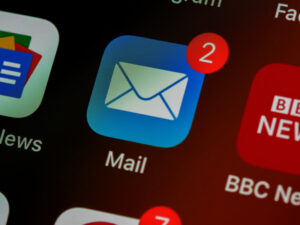
Picture the scene. I’m head down, deep in a task that’s exerting the old grey matter a fair bit, when I hear a ping. For a split second I’m confused. Was it my phone or my laptop? Something made a noise, and that something definitely got my attention!
But which platform makes that particular noise; is it Slack, Teams, Google Chat or WhatsApp? Could it be a calendar reminder, maybe an app notification from Asana or Trello, or maybe an email? But which tool, Gmail or Outlook?
Anyway, as you can imagine, my attention’s been shattered and I’m trying to process not only what’s beeping at me, but what that particular tone of ping is trying to tell me (spoiler alert: I’ll reveal at the end of this article what this mystery alert had really been).
When everything is urgent and nothing is
If it’s a chat message, then I’ll probably look at it straight away. By default chats feel urgent, even when they’re not. They demand immediacy, or at least create the illusion that someone is waiting for a reply (even if in reality they’ve actually just popped off to put the kettle on).
On the other hand, it could be an email. For me, email has become something that I’ll scan, flag and come back to when I have ‘proper time’. I leave emails in my inbox, like a to-do list and then move them to a folder when done.
As I’m pondering all of this, the letterbox clangs and a letter drifts lazily to the hall floor. With a slight sigh, I dutifully get up from my desk and collect the letter. But this is the interesting bit: I immediately open the it.
Of course it’s junk mail. It’s always junk mail. But despite me knowing that, I still open it straight away. Slow, inefficient and inconvenient it may be, but old-fashioned snail mail somehow jumps the queue ahead of everything else. That contradiction struck me.
The slowest channel may be the fastest
Let’s rewind this tortoise and hare story back a few days. I sent an email to a contact and I received an automated response that read:
“Because of the volume of emails I receive, I aim to read your message within three days and respond accordingly”.
Three days!
It made me realise something slightly absurd. If I really wanted to guarantee that someone would read my message quickly, sending a letter through the post might actually be more effective than an email that arrives in seconds.
Of course, that’s wildly impractical. You have to write it, find an envelope, buy a stamp, and then walk to a postbox. But once it arrives, is there more chance it will get opened?
Meanwhile the email, for all its instant, frictionless modernity, sits patiently in an inbox, waiting its turn.
A brain split across channels
A child of the Twentieth Century I may be, but none of this is about nostalgia for filing cabinets or in‑trays. I’m definitely not suggesting we go back to a world of memos or fax machines.
But I do wonder whether the sheer number of communication channels we now juggle, is quietly making work harder, rather than easier.
Each type of tool was meant to solve a problem:
- Email for formal communication
- Chat for quick questions
- Project tools and applications for tasks
- Calendars for time management
Instead, we’ve ended up with them all running at once, all the time. Sometimes a project management tool will ping a notification to my desktop and my phone, drop me a message on Slack and then simultaneously send an email. It’s an absolute cacophony of sounds and notifications (that I still won’t read).
Yes, you’re right, I can actively manage my notification settings in all these channels. But really, who does that? Instead, I get overwhelmed by notifications when I’m busy and that’s when I have the least amount of time to manage them. If things get quiet, well it’s not really a problem that needs solving.
As a result of this digital maelstrom, our brains are having to constantly context shift, from Slack to inbox to WhatsApp to Teams. Each of these platforms have their own rules, expectations and social pressure. We’re not just processing messages, we’re also deciding how quickly we’re expected to respond, and how important each interruption might be.
That cognitive overhead soon adds up.
The illusion of speed
Modern communication tools promise us speed, but speed isn’t the same as clarity. It certainly isn’t the same as focus.
In the analogue world, the old physical in-tray had limits. At least you could see what you had to deal with. You worked through it, one item at a time. It might have been slower, but in theory it was linear, trackable and contained.
Today, tasks arrive from every possible direction, invisibly and continuously. There’s a danger that nothing ever gets done – it just scrolls out of view. Test this hypothesis out by taking a look at just how many unread messages you have at the end of each day.
A pause for thought
Here’s the important point. I don’t want fewer tools for the sake of it and certainly don’t think the answer is turning everything off and pretending it’s 1995 (Microsoft Bob or the film ‘Waterworld’ anyone?).
But I do think it’s worth asking whether adding yet another channel, app or any piece of software where messages can land is genuinely helpful. Rather, is it just fragmenting our already frayed attention just a little bit more?
Maybe the future of better work communication isn’t about being faster.
Maybe it’s about being clearer, calmer and more deliberate about where and how we talk to each other. So that simple ping I heard doesn’t have to split my focus in five different directions, and instead enable me to realise that, in this instance, I had in fact just left the fridge door open!
Read more
Have you ever fallen into the two-factor authentication trap? If so you’ll enjoy this article on ensuring you maintain access to your apps and accounts.
Photo by Brett Jordan on Unsplash