
29th Apr 2026
Celebrating women who drive digital innovation in the GLAM sector
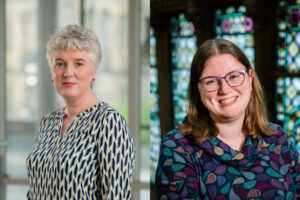
“Don’t just find people who can do the techie stuff; find people who get you and what it is that you are trying to achieve – its spirit and character, not just terabytes.”
Fiona Douglas
Across the galleries, libraries, archives and museums (GLAM) sectors, digital technology is transforming how we preserve, explore and share cultural heritage. At the heart of this transformation are women whose creativity, leadership and vision are reshaping what’s possible. They are pioneers, opening up collections, connecting communities and bringing stories to life in new and meaningful ways.
Following on from this year’s International Women’s Day, we want to celebrate three of the inspiring women who we’ve had the privilege to work with and whose work demonstrates the powerful intersection between culture and digital innovation.
Designing for discovery, not just delivery
For Professor Fiona Douglas, Professor of English Language at the University of Leeds, digital offered a way to bring dialect heritage to life in ways that traditional archives simply couldn’t. Through the Dialect and Heritage Project, she set out not just to digitise material, but to reimagine how people might experience it.
Rather than presenting users with a fixed pathway, Fiona’s approach centred on exploration, allowing people to follow their own curiosity, whether that meant tracing language back to where they grew up or uncovering stories tied to family history. The result was an experience shaped around “a journey of dialect discovery,” brought to life through an interactive map that invited users to wander through language and place.
This emphasis on user-led exploration reflects a broader shift in digital thinking across the sector: away from simply publishing collections online, and towards creating meaningful, intuitive ways for people to engage with them.
It also highlights the importance of collaboration. For Fiona, success depended on working with digital partners who could truly understand the intent behind the project. As she puts it, it’s not enough to find people with technical expertise; what matters is finding those who can grasp the “spirit and character” of what you’re trying to achieve.
The unseen work behind digital access
While digital platforms can feel immediate and effortless to users, Jen Hillyard’s experience offers a valuable reminder of the work that sits behind the scenes.
As Library and Archives Manager at The Common Room, Jen has spent nearly two decades working with their collections that have evolved dramatically over time, not least in how they are accessed digitally. For her, one of the most rewarding moments is seeing an image finally go live online, knowing the hours of cataloguing, permissions and preparation that made it possible.
Yet the real impact often comes afterwards. When those images are shared, recognised and reinterpreted by others, sometimes sparking deeply personal connections, the value of digital access becomes clear. A simple comment like “that’s my dad” speaks to the power of archives not just as records, but as living, shared memory.
Jen’s perspective also brings honesty to the challenges of digital work in the GLAM sector. Timescales are often longer than expected, particularly in smaller organisations where resources are stretched and volunteers play a vital role. Managing rights, metadata and preservation standards requires patience, persistence and careful planning.
At the same time, she points to the growing importance of digital skills within the sector, from frameworks like International Image Interoperability Framework (IIIF) to best practice in digital preservation. For those entering the field, particularly women considering a move into digital roles, GLAM offers a space where technical and cultural expertise can come together in a supportive and purpose-driven environment.
Building connected cultural ecosystems
For Nic Farr, Cultural Services Development Manager at StoriPowys, who is working across a large rural county, digital transformation has been about something bigger than individual platforms: it’s about creating a connected cultural infrastructure.
Through the development of Lluniau, an online photographic collections platform, and the expansion of Stori Powys into a county-wide digital hub, Nic’s work has focused on improving access while also strengthening the systems behind it. These projects haven’t just opened up collections; they’ve helped embed digital thinking into everyday practice, from rights management to long-term preservation.
In a geographically dispersed region, this kind of shared digital infrastructure plays a crucial role. A unified Events Calendar and Creatives Directory, for example, help bring visibility and cohesion to a fragmented sector, enabling collaboration and supporting local creative communities.
What emerges from this work is a clear shift in mindset: digital is no longer an add-on, but a core part of how cultural services without a council operate. It enables organisations not only to reach wider audiences, but to build capacity, confidence and connection across the entire cultural ecosystem.
Shaping the future of digital heritage
Taken together, these perspectives highlight something essential: digital innovation in the GLAM sector isn’t really about technology at all. It’s about people, the stories they tell, the communities they serve, and the experiences they create.
Whether it’s designing spaces for exploration, revealing the hidden labour behind digital collections, or building infrastructure that connects entire regions, the work of Fiona, Jen and Nic [who are three of very many more incredible people working in this sector] demonstrates the depth and diversity of thinking shaping the field today.
Their contributions and those of many other women across the GLAM sector, who we have been incredibly fortunate to work with, are not only advancing digital practice, but helping to create a more inclusive, connected and dynamic future for cultural heritage.